

Real compliance goes far beyond issuing certified clothing, especially in safety-critical environments.
In sectors such as rail, utilities, highways, manufacturing, logistics and heavy industry, hi-vis and protective garments are a frontline safety control. When they fail, the consequences are immediate and potentially life-threatening. True compliance is not just about what’s purchased, it’s about how garments perform, how they’re maintained and whether they remain protective throughout their lifecycle.
Understanding what compliance really means helps site managers, health and safety leads and operations teams reduce risk and strengthen control in environments where safety margins are already tight.
Key takeaways
- Continuous Compliance: Safety is a lifecycle, not a one-off purchase; hi-vis performance degrades over time due to dirt, fading, and wear, requiring constant monitoring.
- Role-Specific Standards: Compliance requires matching exact technical standards (like RIS-3279-TOM for rail) to specific site risks rather than using "generic" hi-vis.
- Invisible Degradation: Technical protections (like flame resistance or retro-reflectivity) can fail without looking damaged, making professional inspection and industrial laundering essential.
- Audit-Ready Management: A managed service replaces guesswork with documented audit trails, ensuring every garment is inspected and repaired to original safety specs.
Compliance starts with the correct standards
The foundation of compliant PPE is certification to recognised standards. For hi-vis garments in the UK, this typically means EN ISO 20471, which specifies the amount of reflective tape and fluorescent background material required to ensure visibility in daylight, low light and artificial light conditions.
Depending on the role and environment, additional standards may apply, including:
- EN ISO 11612 for protection against heat and flame.
- EN ISO 11611 for welding and allied processes.
- EN 1149 for electrostatic properties.
- IEC 61482 for protection against the thermal hazards of an electric arc.
- RIS-3279-TOM for rail industry high-visibility clothing.
Each standard addresses a specific hazard. Compliance means selecting garments appropriate to the risks identified in a formal risk assessment. It isn’t uncommon, however, for sites to assume that all hi-vis is interchangeable when, in fact, it’s not.
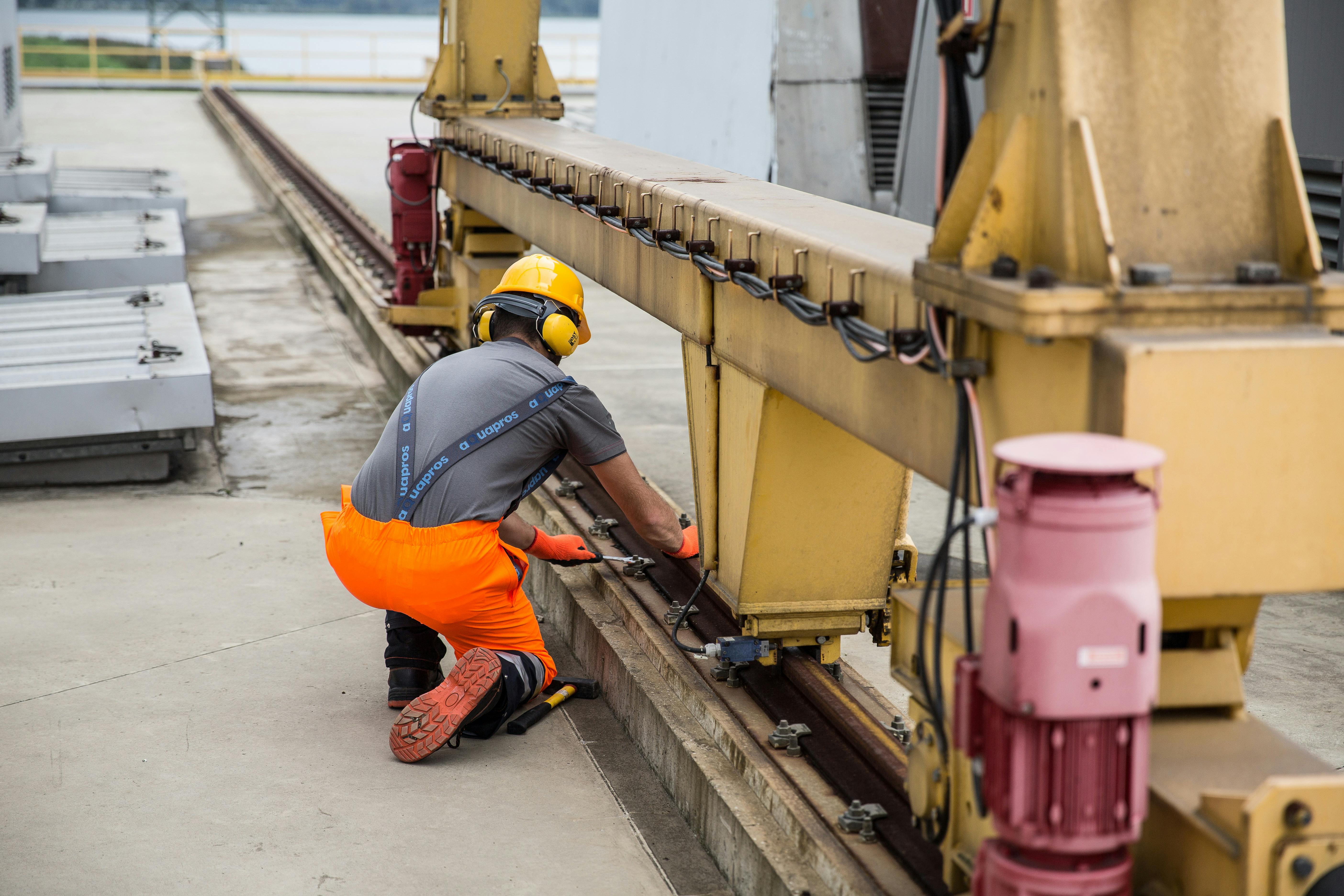
A rail operative, for example, may require RIS-compliant orange hi-vis, while a utilities engineer working near live electrical infrastructure may require arc-rated and anti-static protection in addition to visibility. Issuing the wrong garment, even if it looks suitable, creates immediate exposure.
But selecting the correct standard is only the beginning.
Visibility isn't permanent
One of the most common misconceptions about hi-vis clothing is that once certified, it remains compliant indefinitely. In reality, visibility performance degrades over time.
Fluorescent fabrics fade. Reflective tape becomes cracked, worn or contaminated with dirt and oil. Seams loosen. Repairs may alter the garment’s structure. Even repeated washing can reduce retroreflective performance if not handled correctly.
Under EN ISO 20471, garments are tested when new. They aren't automatically re-tested after months of wear in harsh environments.
This means a jacket that was compliant at the point of issue may no longer meet the required class rating after heavy use. If reflective tape coverage drops below the minimum surface area requirements due to damage or alteration, the garment technically falls out of compliance.
Without structured inspection and replacement processes, it becomes very difficult for site teams to guarantee that employees' clothing continues to meet the standard.
Fabric integrity and protective performance
For PPE that protects against heat, flame or arc flash, fabric integrity is critical.
Flame-retardant garments are engineered with fibres and treatments designed to self-extinguish or resist ignition. Arc-rated clothing is tested to withstand defined levels of thermal energy. Anti-static garments are constructed to dissipate electrical charge safely.
Improper care can compromise these properties.
For example:
- Incorrect detergents may strip flame-retardant finishes.
- Excessive washing temperatures may weaken fibres.
- Fabric softeners can interfere with electrostatic performance.
- Over-drying may shrink or distort protective layers.
These changes aren’t always visible. A garment may appear intact while offering significantly reduced protection.
Compliance, therefore, extends beyond simply wearing certified PPE. It requires controlled laundering and inspection to preserve the protective qualities built into the garment.
Fit and functionality are compliance issues
Another overlooked element of PPE compliance is fit.
Oversized garments may snag on equipment. Ill-fitting hi-vis may restrict movement or create blind spots in reflective coverage. Trousers that are too long present trip hazards. Sleeves that are too short reduce protective surface area.
Uncomfortable or restrictive PPE is also less likely to be worn correctly. Employees may roll up their sleeves, leave their jackets unzipped or substitute personal clothing if issued garments are poorly fitted.
In safety-critical workplaces, these behavioural adaptations can undermine even the best-designed protective clothing.
A compliant PPE programme must therefore include correct sizing, gender-appropriate options where necessary and practical designs suited to the task being performed.
The hidden risk of poor laundering
Many organisations underestimate how laundering is critical to compliance.
In-house or domestic washing can introduce several risks:
- Wash cycles that don't meet thermal disinfection requirements.
- Incorrect chemical dosing.
- Cross-contamination between garments.
- Lack of inspection before reissue.
- No formal documentation of cleaning processes.
In high-risk environments, particularly where contamination, flame or chemical exposure is possible, these gaps can quickly escalate into compliance failures.
If garments aren’t washed according to manufacturer guidance, warranties may be voided and certification performance may degrade prematurely.
Furthermore, during audits or incident investigations, businesses may be required to demonstrate how PPE is maintained. Without documented laundering protocols and inspection records, this becomes challenging.
Lifecycle management defines true compliance
Compliance isn't a one-time event. It is a continuous process that spans the entire garment lifecycle:
- Risk assessment and correct specification.
- Issuing the right garment to the right individual.
- Controlled laundering.
- Routine inspection.
- Repair within defined thresholds.
- Timely replacement.
If any stage breaks down, overall compliance is weakened.
For multi-site operations, the complexity increases. Different sites may adopt inconsistent practices. Replacement decisions may vary. Garment tracking may be informal or non-existent.
This creates uneven standards across the organisation and increases exposure to enforcement action or civil claims following an incident.
Why managed workwear solutions strengthen compliance
A managed workwear model centralises and formalises this lifecycle.
Providers just like Johnsons Workwear operate structured systems that ensure garments are not only issued correctly but also maintained to preserve their protective properties.
Key benefits include:
- Industrial laundering calibrated to protect technical fabrics.
- Documented processes aligned with relevant hygiene and performance standards.
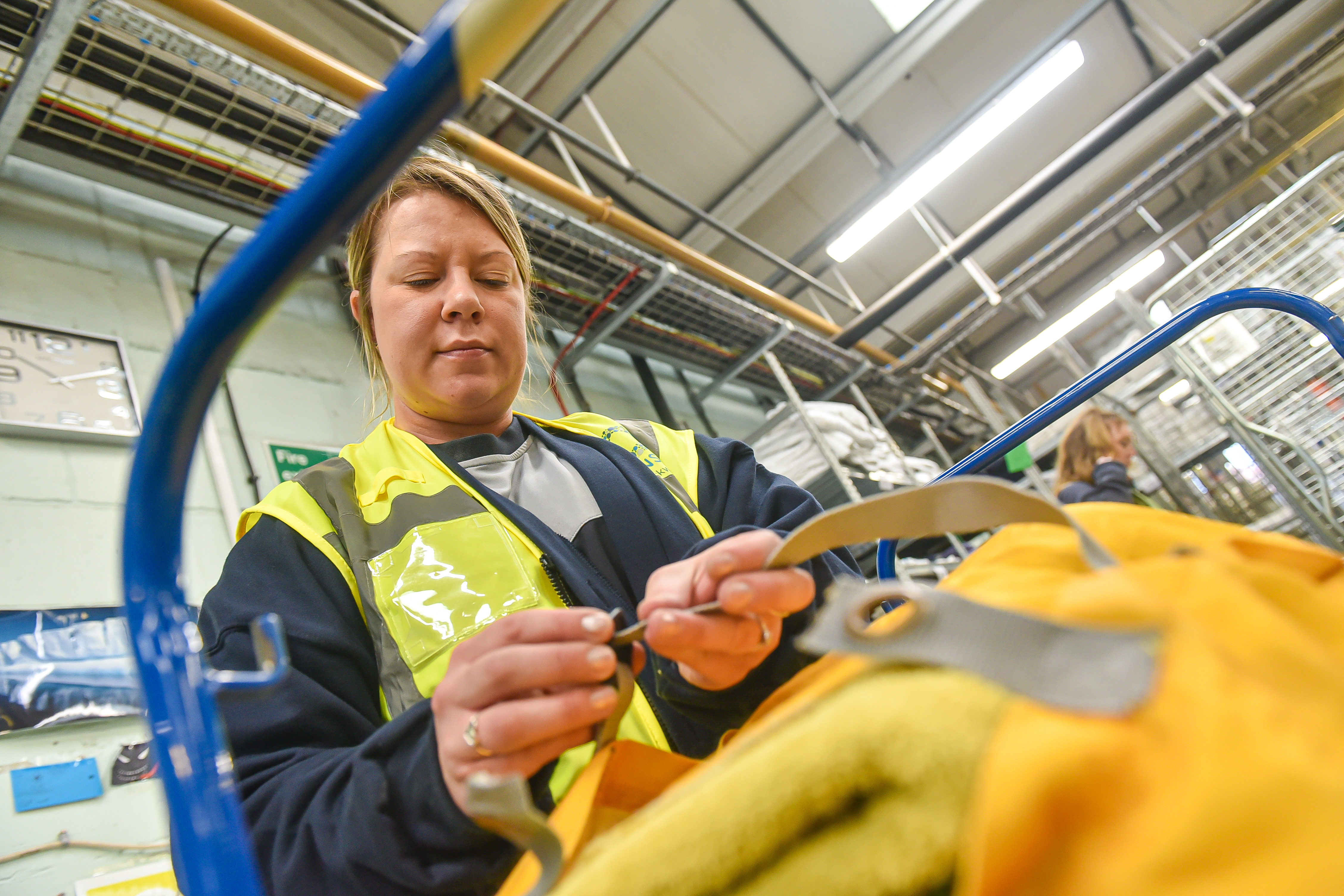
- Systematic garment inspection on every wash cycle.
- Defined repair and replacement criteria.
- Traceability and audit trails.
This removes guesswork from site teams. Instead of relying on visual checks alone, compliance becomes embedded in the service model.
For safety-critical workplaces, this offers reassurance that PPE remains compliant not just when new, but throughout its operational life.
Compliance is about risk control, not paperwork
It's tempting to view compliance as an administrative requirement. In reality, it's about controlling risk in environments where hazards are immediate and severe.
Hi-vis clothing is often the last barrier between a worker and a moving plant. Arc-rated garments may be the only protection during an electrical fault. Flame-resistant clothing can prevent catastrophic burn injuries in seconds.
When garments are poorly maintained, incorrectly specified or allowed to degrade unnoticed, the margin of safety narrows.
True compliance means asking:
- Are our garments still performing to standard?
- Can we evidence how they are maintained?
- Are they fit for purpose in this environment?
- Do we have visibility over their lifecycle?
If the answer to any of these questions is uncertain, there may be gaps that need addressing.
Moving from reactive to proactive safety
Safety-critical industries are increasingly shifting from reactive compliance to proactive risk management. This includes greater scrutiny of PPE management.
Regulators and clients expect demonstrable control, not assumptions.
By treating hi-vis and PPE as managed safety assets rather than consumables, organisations can:
- Reduce the risk of non-compliance.
- Improve workforce confidence.
- Strengthen audit readiness.
- Minimise operational disruption.
- Enhance overall site safety culture.
In high-risk workplaces, small weaknesses can have significant consequences. Ensuring that visibility remains bright, fabrics remain protective and garments remain fit for purpose isn't an administrative burden. It is a fundamental part of keeping people safe.
Compliance, when properly understood, isn't about labels on a jacket. It’s about maintaining performance in the environments that matter most.
Take control of PPE compliance in high-risk environments
If you’re responsible for safety in a safety-critical workplace, compliance can’t rely on assumptions. It needs structure, traceability and expert control.
Our new eBook explores how a fully managed rental and laundering model protects people, budgets and operational continuity across complex, multi-site environments.
Download your copy to discover:
- How to maintain PPE compliance throughout the garment lifecycle.
- The hidden risks of in-house laundering.
- How to reduce administrative burden without compromising safety.
- What best practice looks like in high-hazard industries.
Download the free guide today and strengthen your approach to PPE compliance.







.png)