

High-risk working environments place relentless demands on people and the protective clothing they rely on every day. From manufacturing floors and utilities infrastructure to logistics hubs and waste facilities, garments are exposed to heat, abrasion, contaminants, heavy soiling and constant movement.
When workwear performance drops, risk increases immediately. Visibility reduces. Protective properties degrade. Compliance gaps appear.
Sustainability is often discussed in terms of carbon reduction, recycling or responsible sourcing. But in high-risk industries, sustainable workwear is doing something more fundamental. It is helping to improve safety outcomes.
By prioritising garment longevity, professional care and consistent performance, sustainable workwear systems ensure clothing does its job properly throughout its lifecycle. Rather than being a trade-off between environmental responsibility and protection, sustainability is increasingly becoming a driver of safer, more reliable operations.
This article explores how sustainable workwear practices are redefining safety in high-risk environments and how a managed rental and laundry service supports both environmental and safety performance at the same time.
Key takeaways
- Safety-Driven Longevity: Sustainability focuses on garment durability; a "repair-first" approach ensures minor damage is fixed professionally, preventing gear from failing when workers need it most.
- Preserving Protection: Industrial laundering is safer than home washing because it uses calibrated processes to remove heavy industrial contaminants without stripping away flame-resistant or anti-static treatments.
- Operational Consistency: Longer, managed lifecycles ensure entire teams maintain uniform visibility and protection standards, eliminating the risk of individuals wearing degraded or non-compliant gear.
- The Rental Advantage: A managed rental model aligns environmental and safety goals, as providers are incentivized to proactively maintain and repair garments to keep them in safe, active service for longer.
Why workwear performance matters in high-risk environments
In high-risk industries, workwear is a critical control measure.
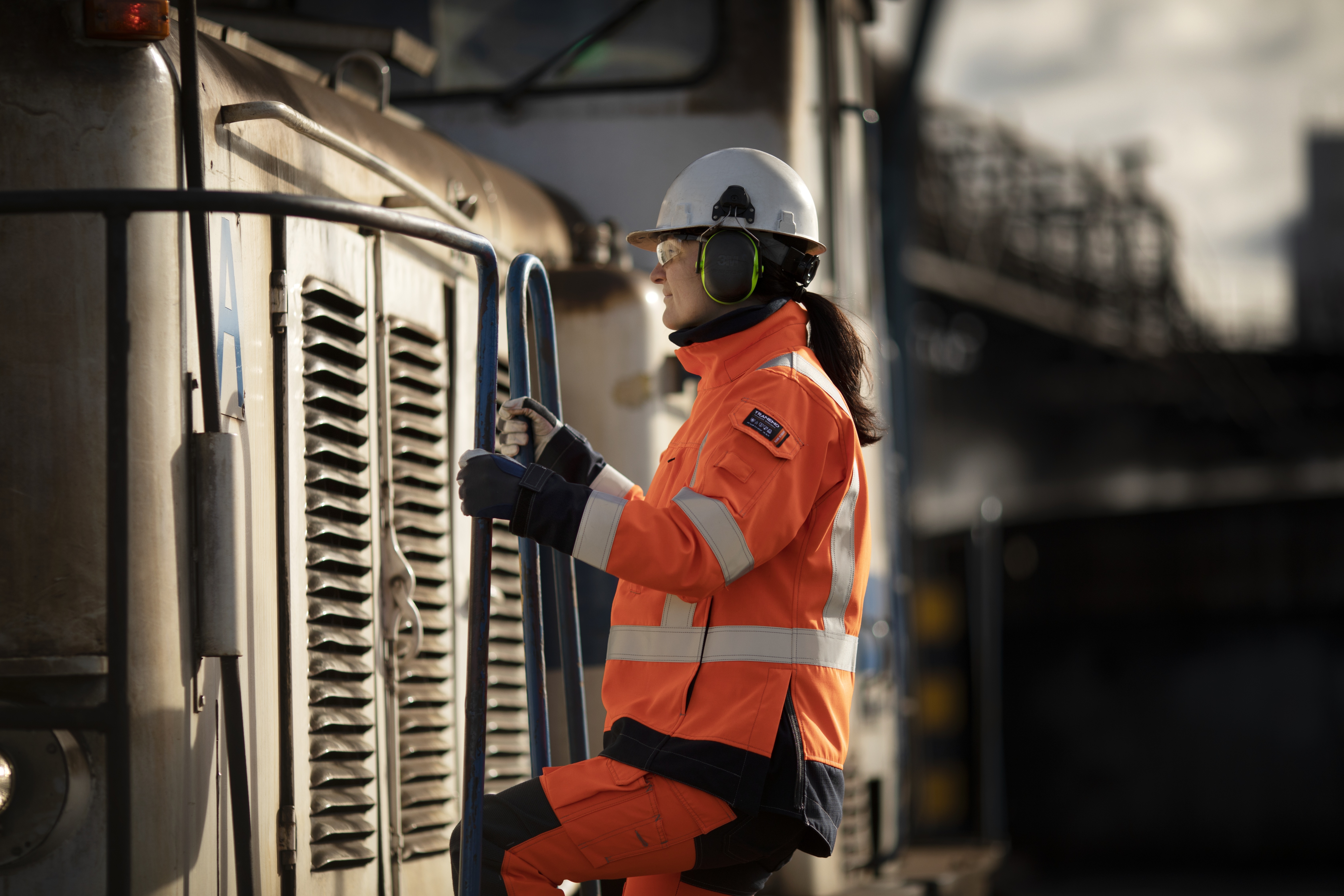
High-visibility garments keep workers visible around vehicles and plant. Flame-resistant fabrics protect against heat and sparks. Arc-rated clothing safeguards against electrical hazards. Anti-static garments reduce electrostatic discharge risk. Chemical-resistant materials help protect against splashes and contaminants.
When garments perform as intended, they actively reduce the likelihood and severity of incidents.
However, performance is not permanent. Over time, garments are exposed to:
- Industrial contamination.
- UV degradation.
- Mechanical stress.
- Repeated washing.
- Abrasion and tearing.
If workwear is poorly maintained or inconsistently replaced, protective performance can degrade gradually and often unnoticed. Reflective tape can dull. Flame-retardant properties can be compromised. Fabric strength can weaken.
Sustainable workwear systems focus on maintaining that performance over time, ensuring garments continue to meet safety standards throughout their usable life.
The link between sustainability and safety
Sustainability and safety are often treated as separate business priorities. In reality, they are closely connected.
Sustainable workwear for high-risk environments is built around extending garment life without compromising protection. That requires:
- Higher-quality garment design.
- Structured repair processes.
- Controlled laundering.
- Regular inspection.
- Responsible end-of-life recycling.
When garments are managed through a sustainable lifecycle approach, they are also managed more consistently. That consistency is what drives better safety outcomes.
A repair-first approach, professional laundering and proactive garment monitoring reduce the risk of workers wearing damaged, faded or non-compliant clothing. Instead of reacting to failures, sustainable systems prevent them.
Repair-first approaches reduce PPE failure
One of the core principles of sustainable workwear is repairing garments wherever possible rather than replacing them prematurely.
In high-risk environments, this has clear safety implications.
Minor damage such as small tears, loose seams or worn fastenings can escalate quickly. A damaged hi-vis jacket, compromised arc-rated sleeve or weakened seam can increase risk significantly if not addressed.
Without a structured repair process, workers may continue wearing compromised garments simply because replacements are not immediately available.
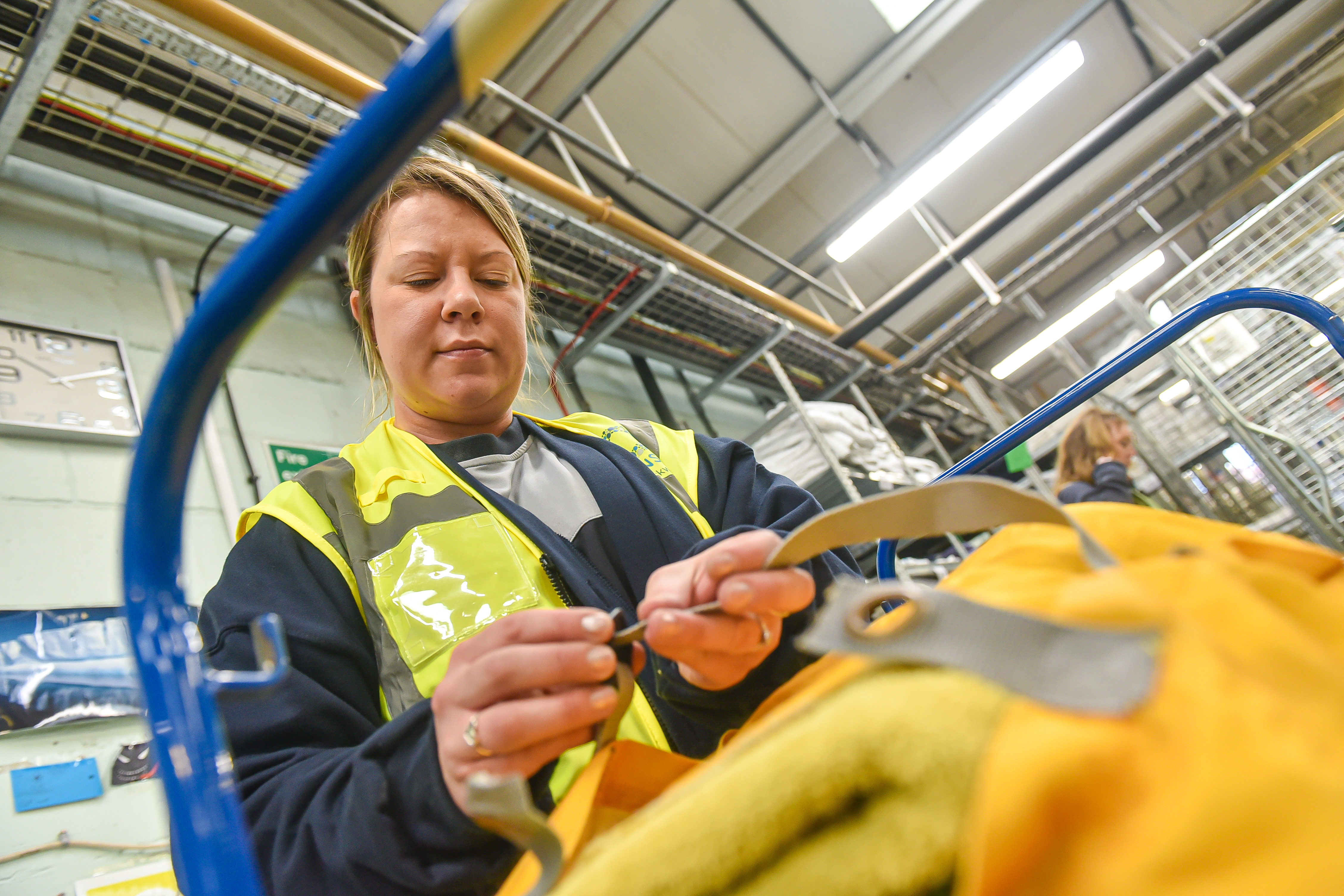
Professional repair services ensure:
- Damage is identified during inspection.
- Seams are reinforced.
- Zips and fastenings are replaced.
- Reflective tape is restored where appropriate.
- Garments are withdrawn when they can no longer meet required standards.
This reduces the likelihood of PPE failure during use and removes the risk of informal, unsafe repairs being carried out on site.
Repair-first thinking extends garment life, reduces waste and strengthens safety performance at the same time.
Efficient laundering supports consistent performance
Laundering is one of the most critical links between sustainability and safety.
In high-risk industries, garments are frequently contaminated with oils, dust, chemicals and industrial residues. Cleaning is essential, but how garments are cleaned directly affects their lifespan and protective properties.
Uncontrolled or domestic laundering can:
- Damage reflective tape.
- Reduce flame-retardant performance.
- Affect anti-static properties.
- Cause excessive fabric shrinkage.
- Accelerate wear.
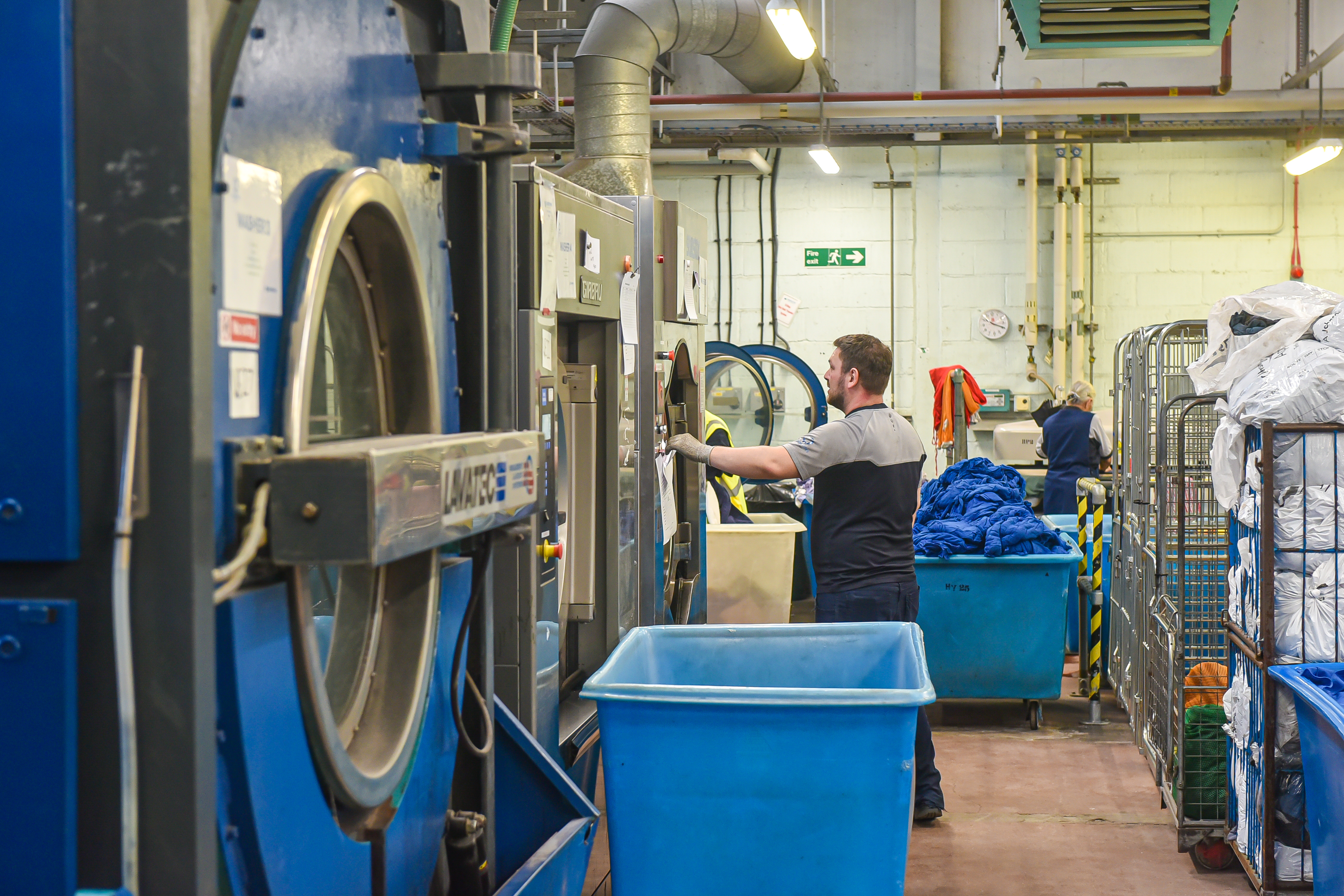
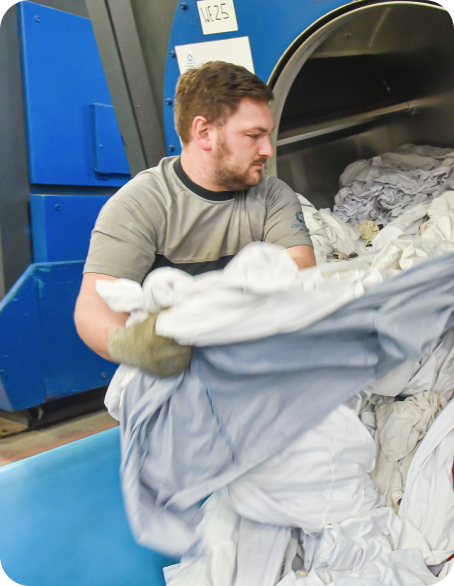
Sustainable workwear systems rely on professional industrial laundering processes designed to clean effectively while preserving garment integrity.
Controlled wash temperatures, specialist detergents and calibrated chemical dosing ensure garments remain compliant with relevant standards throughout their lifecycle. At the same time, efficient laundering minimises water, energy and chemical usage.
The result is clothing that remains hygienic, compliant and durable for longer.
Longer garment lifecycles create greater operational consistency
Short-life workwear often creates inconsistency across sites.
Frequent replacement cycles can result in mixed garment types, varying visibility levels and uneven protection standards. Workers may wear older items while waiting for replacements, increasing risk exposure.
Sustainable workwear focuses on longer, better-managed lifecycles. High-quality fabrics, reinforced construction and professional maintenance mean garments remain in safe use for longer periods.
This consistency delivers:
- Uniform visibility across teams.
- Reliable protective performance.
- Fewer emergency replacements.
- Reduced operational disruption.
In high-risk environments, consistency is a safety advantage.
Visibility is protected through structured garment care
Visibility remains one of the most important protective factors in many high-risk settings.
High-visibility garments must maintain both colour brightness and reflective performance to comply with standards such as EN ISO 20471.
Poor care practices can cause fluorescent fabrics to dull and reflective tape to crack or peel. Over time, garments may still appear acceptable but fail to meet required performance thresholds.
Sustainable workwear systems incorporate regular inspection and proactive replacement. Garments that fall below acceptable visibility standards are removed from circulation before they create risk.
Maintaining visibility performance throughout the garment’s lifecycle directly reduces the likelihood of vehicle-related incidents and plant collisions.
Reducing administrative burden strengthens safety focus
Workwear management can place a significant burden on operations teams in high-risk industries.
Tracking sizes, ordering replacements, arranging cleaning and managing stock across multiple sites can quickly become complex. Administrative pressure increases the risk of oversight and delays.
Sustainable managed workwear systems reduce that burden by embedding garment management into a structured service model.
Garments are issued, tracked, laundered, inspected and replaced as part of a continuous process. This removes reactive decision-making and reduces the chance of non-compliant garments remaining in use.
When operations leaders spend less time managing logistics, they can focus more effectively on safety-critical responsibilities.
Sustainability supports resilience during supply chain disruption
High-risk industries are not immune to supply chain challenges. Delays, shortages and cost pressures can impact garment availability.
Sustainable lifecycle management reduces reliance on constant new garment procurement. Repair-first approaches and extended garment lifespans lower the volume of urgent replacements required.
This resilience ensures compliant workwear remains available even during periods of disruption, reducing the risk of gaps in protection.
The role of managed rental in delivering sustainable safety
A managed workwear rental service aligns sustainability and safety in a practical way.
Under a rental model:
- Garments remain the provider’s responsibility.
- Professional laundering preserves performance.
- Repairs are completed proactively.
- Non-compliant garments are replaced automatically.
- End-of-life textiles are recycled responsibly.
Because the provider retains ownership, there is a built-in incentive to maximise garment lifespan while maintaining protective standards.
For organisations operating in high-risk environments, this delivers:
- Consistent compliance.
- Predictable costs.
- Reduced waste.
- Simplified garment management.
- Improved safety outcomes.
Johnsons Workwear’s managed service is designed around these principles, supporting businesses across high-risk industries with structured, sustainable and compliant garment solutions.
Sustainable workwear as part of a wider safety culture
Sustainable workwear should not be viewed as an environmental add-on. It forms part of a wider safety culture.
When workers are provided with well-maintained, comfortable and reliable garments, it reinforces the message that their safety matters. Consistent standards encourage correct PPE usage and reduce informal modifications.
By embedding sustainability into garment management, organisations strengthen both their environmental credentials and their safety culture.
Looking ahead: safety and sustainability working together
As regulatory expectations and client requirements continue to evolve, high-risk industries are under increasing pressure to demonstrate both compliance and environmental responsibility.
Sustainable workwear for high-risk environments offers a practical way to achieve both.
By focusing on repair, professional laundering and structured lifecycle management, organisations can reduce waste while improving garment reliability and safety performance.
Rather than treating sustainability and safety as competing priorities, forward-thinking businesses are recognising that they reinforce one another.
To learn more about how Johnsons Workwear supports high-risk industries with managed, sustainable and compliant workwear solutions, visit our high-risk environments sector page and speak to our team about strengthening protection across your operations.




.png)