

Key takeaways for your business
- Closed-loop model: The circular economy moves beyond the traditional linear model (take-make-dispose) to a closed loop where resources are reused, repaired and recycled.
- Commercial laundry's role: Laundry services are essential enablers of the circular economy by extending the lifespan of workwear, reusing textiles via rental schemes, and optimising inventory to reduce waste and overproduction.
- The triple benefit: Adopting a sustainable laundry system delivers lasting advantages: Environmental (prevents textile waste/pollution), business (lower total cost of ownership, durability and compliance) and reputational (demonstrates genuine ESG commitments).
- Johnsons Workwear's commitment: Our operations are designed around circular principles, including professional laundering, in-house repairs, workwear rental and partnering with textile recyclers to turn end-of-life garments into new resources.
The concept of a ‘circular economy’ lies in thinking about (and then rethinking) how you (and we as a collective) can use resources more sustainably.
Traditionally, most industries have followed a linear model. We take raw materials, make products and then dispose of them when considered useless. Simple, but wasteful.
The circular economy takes a different approach. Instead of a straight line, think of the circular economy as a closed loop. A cycle where resources are reused, repaired and recycled rather than just thrown away when they no longer fit their primary use. The focus of the circular economy is on making products last longer, reducing unnecessary waste and using resources more efficiently.
For different industries across the UK, ‘circular economy’ is more than just a sustainability buzzword. Businesses are quickly realising that a circular approach to their operations can help cut costs, reduce waste and support their ESG goals — and it’s not that difficult to adopt.
However, while it’s often associated with manufacturing or packaging, one area you might not expect the circular economy to play a key role in commercial laundry. Yet, when you think about the scale of workwear and textiles in circulation across the UK, it becomes clear that laundry services are essential to making the circular economy work in practice.
In this blog post, we explore how circular principles apply to commercial laundry, the benefits of a sustainable laundry system and its role in the circular economy and how Johnsons Workwear is helping businesses across the UK close the loop and achieve their sustainability targets — one wash load at a time.
How commercial laundry fits into the circular economy model
The circular economy model is evident in action across various industries in the UK, including commercial laundry.
By rethinking how your workwear garments are cleaned, maintained and circulated, laundry providers like Johnsons Workwear are proving sustainability can be easily built into everyday operations. But what does the commercial laundry industry do that fits into the circular economy model?
Extending the lifespan of the workwear
One of the biggest contributions the commercial laundry industry can make to a circular economy is extending garment lifespan.
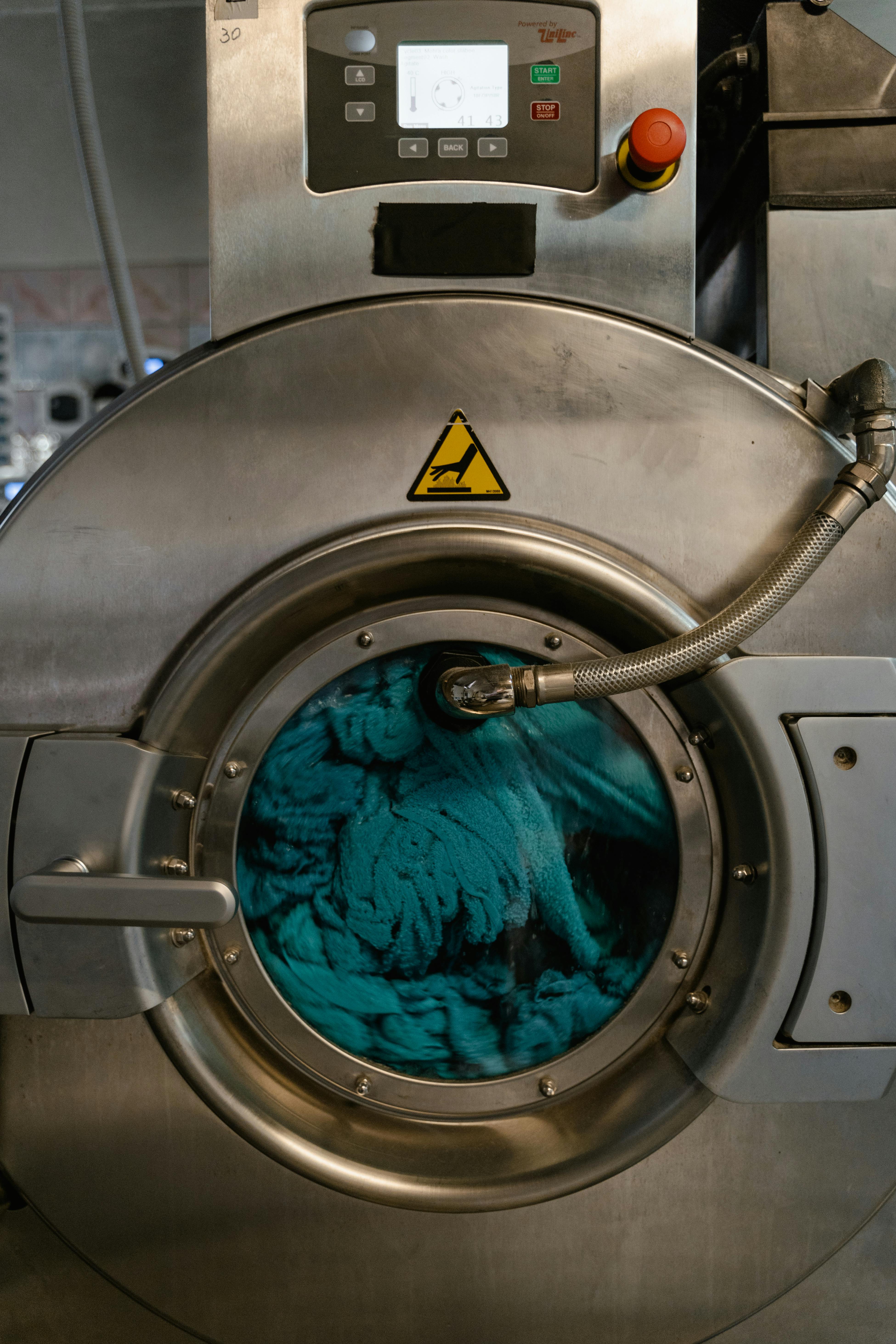
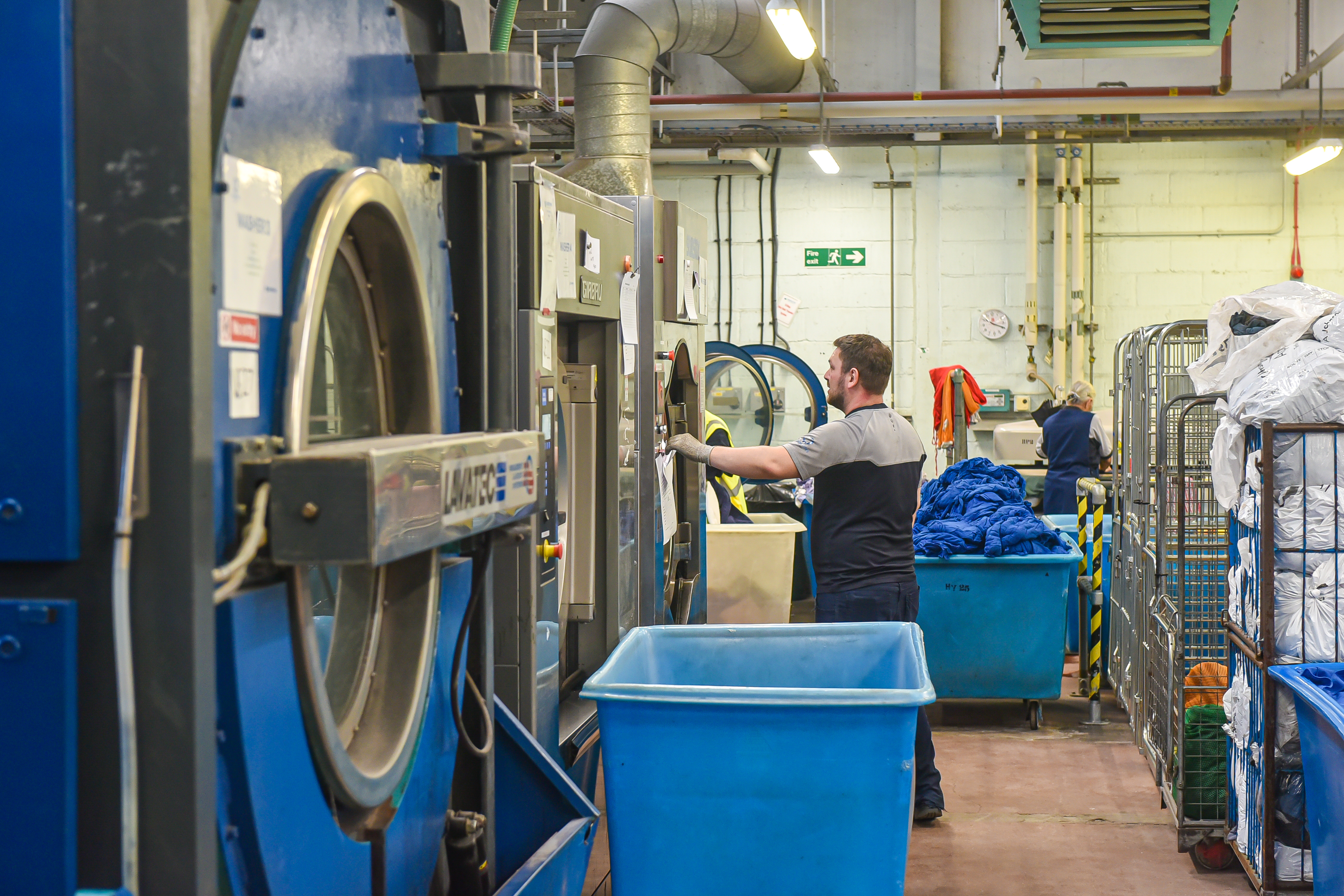
Professional, industrial laundering uses controlled and standardised processes that are far gentler on textiles compared to home washing. This means that, with the right chemicals, temperatures and finishing methods, clothing and textiles last much longer and perform much better.
Many workwear providers, like ours, also offer in-house repairs to the garments they supply. By repairing and altering your uniforms, we can give it a second life, rather than replacing it prematurely and sending it to landfill.
Reusing garments and textiles
Another circular aspect of commercial laundry sustainability is its innovative reuse of textiles. These include workwear rental and end-of-life return schemes that ensure garments remain in circulation for as long as possible.
Instead of every employee owning multiple sets of clothing, garments can instead be pooled, cleaned and redistributed by the service provider, reducing the need for constant new production and then recycled when they no longer fit their primary use.
Optimising inventory
Finally, commercial laundries can contribute to waste reduction and circularity through smarter inventory management.
By monitoring garment usage and rotation, the laundry can ensure stock levels are controlled, repairs are made promptly and textiles are only replaced when absolutely necessary.
This can prevent surplus ordering and overproduction from their suppliers and keeps unnecessary waste out of the supply chain and landfill.
Benefits of a sustainable laundry system within the circular economy
A sustainable laundry system within the circular economy delivers more than just clean garments, it creates lasting benefits for the environment, the laundry supplier and the businesses it services.
By embracing a workwear provider that uses closed-loop processes, companies can turn their workwear laundry into a driver of efficiency, savings and sustainability throughout the chain. Below are the three main benefits of a sustainable laundry system:
1. Environmental benefits
Quite obviously, the first thing that comes to mind is the environmental benefits of a sustainable laundry system.
With garments being washed, repaired, reused and recycled, instead of just simply discarded, closed loop processes help prevent textile waste from being sent to landfill. This, in turn, reduces the impact of long-term pollution on the environment, as some materials can take decades to decompose, contaminating the planet in the process.
2. Business benefits
Investing in a workwear provider that uses a sustainable laundry system can also benefit your business. By keeping garments in circulation longer, your company can achieve a lower total cost of ownership than with disposable or short-life alternatives.
Plus, rather than constantly buying replacements, investing in quality workwear or a workwear rental service and professional care pays off in durability, consistency and compliance for your team and operations.
3. Reputational benefits
There are also wider reputational benefits to both the provider and businesses using them. By investing in a sustainable laundry system, customers, stakeholders and employees increasingly expect companies to demonstrate genuine sustainability commitments.
So, by working with a service provider that uses a sustainable laundry system, it shows that responsibility is built into all aspects of your operations.
The role of eco-friendly laundry services in the wider circular economy
By aligning their practices with the principles of the circular economy, eco-friendly laundry providers become more than just service partners, they act as enablers of long-term environmental responsibility for businesses across the UK.
But how does the sustainable side of the commercial laundry industry support the wider circular economy?
Greener processes
Through carefully managed processes, an eco-laundry service ensures garments are cleaned in ways that maximise their lifespan while minimising necessary resource use.
From energy-efficient equipment to water recycling systems, commercial laundry and workwear providers are constantly innovating to reduce the environmental footprint of every wash cycle.
Interested to learn more? Read our guide on commercial laundry sustainability for a complete breakdown.
Textile recycling
Another vital way eco-friendly laundry services support the wider circular economy is through their partnerships with textile recyclers.
When garments reach the end of their usable life, eco laundry providers can ensure fabrics are recycled or repurposed into new materials or uses, rather than sent to landfill. This keeps the textile within the loop, turning waste into a resource and feeding it back into the supply chain.
Sustainable supply chain
Crucially, and key to the circular model, eco-friendly laundry services form part of a sustainable supply chain. By partnering with eco laundry providers, businesses can demonstrate tangible action on sustainability, reassure customers, stakeholders and employees, and contribute to wider industry or ESG goals, such as reducing carbon emissions and cutting waste.
These services can act as a bridge between everyday business operations and the bigger picture of the circular economy, keeping resources in use, supporting responsible consumption and helping industries across the UK move towards a greener future.
Making the switch: How businesses can support the circular economy through laundry
For businesses looking to instigate change and improve their ESG reporting, the commercial laundry industry offers a clear opportunity to support the circular economy and move toward a more sustainable supply chain.
Not sure where to start? Read our guide on what to look for in an eco-friendly laundry service, covering everything from chemical use to certifications.
By working with the right eco laundry service and embedding their green practices into your procurement strategies and wider business operations, your company can actively contribute to the circular economy whilst meeting sustainability targets and improving long-term value.
Johnsons Workwear supports the circular economy
At Johnsons Workwear, we believe commercial laundry should help the businesses we service, as well as ourselves, build a stronger, more sustainable future. That’s why our operations are designed around the principles of the circular economy, ensuring the resource we need to utilise are used responsibly and garments are kept in circulation for as long as possible.
Part of our sustainable laundry system focuses on garment longevity. Through professional laundering and in-house repair services, we not only extend the lifespan of your workwear, but also reduce the need for constant replacements and prevent unnecessary textile waste from being sent to landfill.
We also support circular practices through our innovative service models. Our workwear rental service ensures uniforms remain in use for as long as possible, while our reusable packaging solutions reduce single-use plastics.
Plus, when garments finally reach the end of their life, we work with recycling partners to ensure textiles are repurposed responsibly rather than discarded.
By embedding these principles into every stage of our service, Johnsons Workwear provides more than just a laundry solution. We deliver our customers a partnership that supports their sustainability goals, strengthens compliance and actively contributes to the circular economy.
We’re proud to be a sustainable provider within the workwear supply chain, helping support businesses like yours make greener, more circular operational decisions.
Read more about our sustainability commitment or get in touch with our team to learn more.



.jpeg)